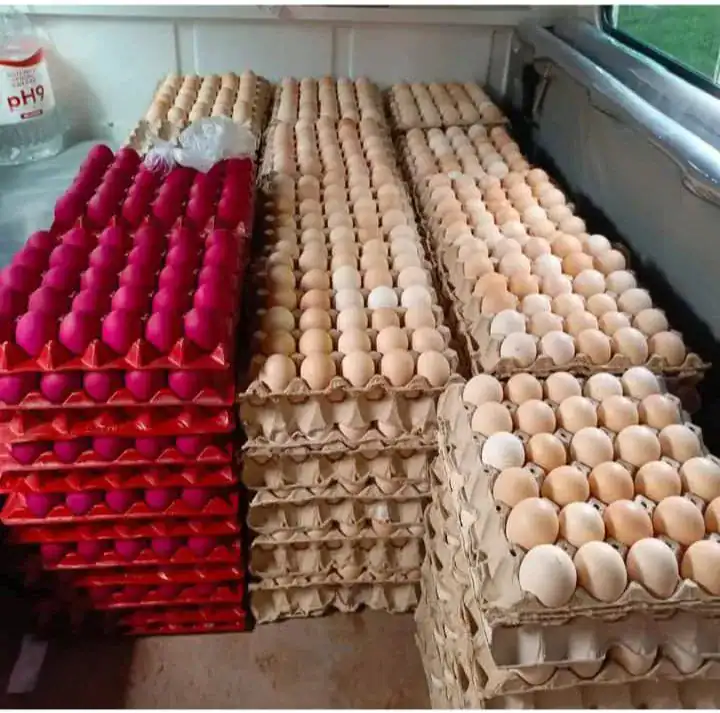
Why Egg Prices Change Daily in India
If you’ve ever noticed that egg prices seem to zigzag day by day, you’re not alone. One week, eggs are ₹5 each, the next week, they’re ₹6, and during certain seasons, they shoot up even more. Egg prices in India do change almost daily, and there are good reasons for it. This daily fluctuation is driven by a combination of economic, seasonal, and logistical factors unique to the egg industry. In this article, we’ll explore why egg prices aren’t static, who sets the price, and the key factors that make today’s egg price different from yesterday’s.
Who Decides the Daily Egg Price?
In India, the primary reference for egg prices is the National Egg Coordination Committee (NECC). NECC is a cooperative body of poultry farmers that was established to stabilize and coordinate egg pricing across the country. Every day (or frequently), NECC announces suggested wholesale prices for eggs in different regions.
NECC isn’t a government agency, but the industry largely follows its declared rates as a benchmark. Each region (zone) has a committee that gathers information and decides the price based on local conditions. They consider: Current supply vs. demand in that area. – Input costs like chicken feed, electricity, transport, etc. The goal of giving farmers a fair price while keeping eggs affordable for consumers (NECC’s motto has been “My Egg, My Price, My Life,” indicating farmers set prices to cover their livelihood).
These NECC rates are wholesale farm-gate prices (what poultry farmers get when selling in bulk). They are usually quoted as ₹ per 100 eggs or per egg in each city. For example, NECC might declare that in Delhi today, eggs are ₹660 per 100 eggs (which means ₹6.60 each).
Because NECC updates these often, egg prices appear to change daily. Retailers then adjust their selling price accordingly. It’s a bit like a stock market for eggs responding to market forces.
Key Factors That Cause Daily Fluctuations
Unlike some grocery items that have stable prices for months, eggs respond quickly to various factors. Here are the main reasons egg prices can change day-to-day:
1. Supply and Demand Dynamics
Demand for eggs isn’t the same every day. It changes with seasons, events, and consumer habits: – In winter months, demand surges. Eggs are seen as “warming” and nutritious – people tend to eat more eggs (think of all those winter omelets and eggnog). Reports in late December 2025 showed a 25–50% price increase as winter demand spiked across India. Consumers in cities were paying ₹8 or more per egg, whereas a few months earlier, it was much lower. – During summer, demand can dip a bit because eggs are considered “hearty” by some, and fewer people crave them in hot weather. School holidays (when mid-day meal schemes pause) can also reduce bulk demand for eggs temporarily. – During certain festivals or fasting periods, demand might drop (some communities avoid eggs during religious observances), potentially softening prices for those days or weeks. – On the other hand, during festivals like Christmas or wedding seasons, when bakeries and hotels use more eggs, demand can rise.
When demand goes up, and supply doesn’t keep up, prices rise. Conversely, if demand falls or is steady but supply increases, prices might inch down.
Supply of eggs can fluctuate due to: Production cycles: Hens don’t lay the same number of eggs year-round. Cold weather can cause hens to lay fewer eggs. Poultry experts note that in colder months, laying patterns are affected and output is reduced. So, in winter, just as demand rises, supply from farms might drop – a double whammy that pushes prices up. Flock size: If there were a lot of poultry farming expansion, supply might increase (putting downward pressure on price). Alternatively, if many farmers cut down their flock size (say, due to earlier low prices or disease losses), supply tightens. Regional imbalances: Some states are major egg producers (Tamil Nadu, Andhra Pradesh, Telangana, etc.), while others are net consumers. If producer regions can’t ship enough eggs out, consuming regions see shortages. For example, in Uttar Pradesh, daily consumption is ~6 crore eggs, but they produce far less, so they rely on eggs shipped in from other states. Any hiccup in that pipeline can cause prices in UP to jump on short notice.
In essence, the classic law of supply and demand operates on eggs daily. Traders watch how many egg loads are coming to the market and how many buyers are lining up. If one day fewer trucks arrive (supply dip), prices at the auction can tick up by a few paise per egg to balance it out.
2. Seasonal Trends
India experiences strong seasonal effects on the egg market: Winter (Oct-Jan): Prices tend to rise. As noted, high consumption in winter (people up their protein intake, and eggs are a cheap source) drives this. One news article in December 2025 dubbed it “eggflation,” with eggs hitting ₹8-10 in metros. Also, winter school exams and sports events often prompt nutrition campaigns (eggs for students, etc.), adding to demand. – Summer (Apr-Jun): Often a dip or stabilization in price. Eggs don’t sell as fast in scorching heat. Also, hens might lay well in early summer before extreme heat hits. – Monsoon (Jul-Sep): This can go either way. Sometimes production is steady, but if monsoons are very wet, logistical issues can occur. Also, feed ingredients like maize might be in the new harvest, affecting costs (more on feed soon).
These seasonal patterns cause predictable trends, but the day-to-day changes are as markets adjust gradually rather than in one big jump. You might see, for example, a steady rise of a few paisa per egg each day over a week in winter, rather than a ₹1 jump overnight (unless there’s a sudden event).
3. Feed and Input Costs
One major factor behind egg pricing is the cost of production, especially the cost of poultry feed. Chicken feed consists mainly of maize (corn) and soy as the key ingredients for layers. If those commodity prices change, it squeezes or eases the farmers’ margins, and eventually reflects in egg prices: Feed price increase: If maize or soybean prices go up (due to poor harvest, global price changes, etc.), farmers face higher costs. To avoid losses, egg prices need to increase. In recent times, feed costs have remained high, contributing to firmer egg prices. Other inputs: Costs like electricity (for farm lighting and incubators), diesel (for running generators or transporting eggs), and labor wages can also affect the baseline cost of producing eggs. When these go up due to inflation, egg prices tend to inch up correspondingly.
Feed cost impact isn’t immediate on day-to-day prices, but sustained changes create a trend. However, during feed shortages or price spikes, you might see more rapid increases. For instance, if there’s news of a soybean crop failure, traders might speculate that eggs will become costlier and adjust prices upward in anticipation.
4. Weather and Production Issues
Beyond seasonal averages, specific weather events can cause daily price volatility: A sudden cold wave can abruptly reduce hen productivity (even with climatic controls, small farms feel the effect), leading to fewer eggs for a few days and thus higher prices until things normalize. Heat waves in summer can stress birds despite cooling systems, sometimes increasing mortality or reducing laying. That again can curtail supply unexpectedly. – Heavy rains or floods might disrupt transport routes – eggs can’t get from the farm to the city. In those affected days, local markets might temporarily have fewer eggs, bidding the price up.
These are short-term shocks that can make egg rates swing for a period of days or weeks.
5. Disease Outbreaks in Poultry
Disease outbreaks (like bird flu or other poultry illnesses) can have a sharp impact. If there’s a bird flu outbreak in a key egg-producing region: – Many hens may be culled as a containment measure, instantly reducing egg supply. – Consumer demand can also dip out of fear of illness (even though well-cooked eggs are safe, people panic). Still, usually the supply reduction effect dominates, raising prices in unaffected areas.
For example, ThePrint reported that disease outbreaks in sourcing states like Andhra Pradesh and Tamil Nadu “caused the price spike in Maharashtra” in late 2025. Essentially, if AP/TN farms had to cull flocks or couldn’t ship out due to containment zones, Maharashtra’s egg supply shrank, and prices there climbed.
On a day-to-day scale, when such news hits, you might see a jump in egg prices over a couple of days as traders respond to the expected shortage. Conversely, once the situation is resolved, prices might stabilize or drop.
6. Transportation and Fuel Costs
Eggs are transported daily from production centers to consumption centers. Changes in fuel prices or transport availability can add minor fluctuations: – If diesel prices go up significantly, the cost to truck eggs increases, and wholesalers may add a bit to the price to cover that. This might not cause daily swings, but month-over-month it contributes to price levels. – Strikes or transport halts: If trucking unions strike, or there’s a regional transport issue (say a highway blockade), some cities might get fewer egg shipments that day/week, affecting prices due to temporary scarcity.
Logistics are a constant background factor. Eggs have to move quickly (they’re perishable to an extent), so any hitch in logistics can immediately create a local shortage.
For instance, if on a certain day only 5 lorries reach a city’s egg market instead of the usual 10, the traders will bid up that limited stock – even if just by a few rupees per 100 eggs – to ration the supply.
7. Market Competition and Coordination
The egg industry does quietly coordinate to avoid drastic swings, but competition also plays a role: – Coordination: NECC, as mentioned, was formed to prevent price crashes and overly erratic changes. They often adjust prices in small increments (like 5 or 10 paisa per egg) rather than big jumps, unless absolutely needed. This is to ensure stability. You might see a pattern like: “today +10 paisa, tomorrow +5 paisa” rather than ₹1 at once. Competition: In some areas, multiple traders compete. If one trader has a glut of eggs, he might lower his asking price slightly for that day to undercut others, leading others to match downwards, causing a mild dip locally. Conversely, if traders collectively hold stock, they might be firm on price.
It’s worth noting that until 2022, NECC’s price declarations were often treated as fixed mandatory rates by the industry, but the Competition Commission of India cracked down on that practice, terming it cartel-like. NECC now states prices as advisory. In practice, though, most follow the announced price closely. This means daily changes are somewhat centrally influenced rather than purely random. The NECC zonal heads gauge all the above factors and then declare a suitable price each day.
Real-World Example: The Winter 2025 Egg Surge
To illustrate how these factors play out, let’s briefly look at what happened in late 2025: Demand hit record highs: With a colder winter and more people post-pandemic focusing on protein, egg consumption shot up. Consumers in Tier-1 cities started paying ₹7-9 per egg. Production couldn’t catch up: Namakkal (the egg bowl of India) saw its local farm rates hit ₹6 for the first time, meaning even at the farm gate prices were highest on record. Farmers were struggling to produce enough to meet demand. Feed cost was up: Maize and soy prices hadn’t fallen, keeping production costs elevated. Result: NECC rates climbed steadily from August to December. Data showed that in big cities, the price for 100 eggs went from about ₹550 in August to ₹700 by December. That’s a 27% rise over three months, reflected in small daily upticks.
Industry experts predicted prices would remain high through winter and possibly start easing as temperatures warm and production normalizes. This scenario repeats in cycles – a few years ago, in 2019 and 2017, similar winter peaks happened.
Why Local Prices Sometimes Differ
While NECC gives a baseline, you might notice that the price in one city is different from another on the same day. For example, it might be ₹5.50/egg in one state and ₹6.00/egg in another simultaneously. Reasons: Transport cost and distance: Cities closer to production centers (e.g., Chennai is near Namakkal, a major producer) often have slightly lower prices than far-flung cities that incur more transport cost or losses in transit. Local demand variations: Some cities simply consume more eggs (e.g., some South Indian cities have a strong egg-eating culture all year). High local demand can keep prices a bit higher. State taxes or policies: While eggs are generally tax-exempt as food, any local mandi fees or octroi can add a bit to the cost. – Zone pricing strategy: NECC’s zonal committees might set different rates. For instance, as per NECC data in early 2026, Mysuru had the highest egg rate in India (around ₹7.06/egg) while some places in Telangana were at ₹6.30. This reflects local market conditions – Mysuru possibly had a tight supply or higher demand at that time.
Over time, supply shifts (eggs will be routed from lower-price areas to higher-price areas by traders seeking arbitrage), so these differences stabilize. But day to day, yes, location matters.
The Bottom Line
Egg prices change daily in India primarily because the egg market is highly responsive: Hens lay eggs daily, shipments go out daily, and prices are adjusted daily – it’s a fast-moving commodity. – External factors (weather, feed, demand) can immediately influence how many eggs are available or wanted, and prices respond in kind. – A coordinating body (NECC) actively manages these prices to reflect conditions and keep the industry healthy.
For consumers, this means the price you pay at the store can vary each time you shop in small ways. The good news is, despite fluctuations, eggs remain one of the most affordable proteins. Even when they hit ₹6–₹7 apiece in a surge, they’re still cheaper than most protein sources, which is why demand stays high.
Being aware of these patterns can help, for instance, you now know winter is usually pricier for eggs, so you won’t be surprised by a higher bill in December. And if you’re curious about today’s egg price in your city, you can always look up NECC’s latest rate or check local market reports.